Ethereum Blockchain Explorer Tricks Nobody Tells You
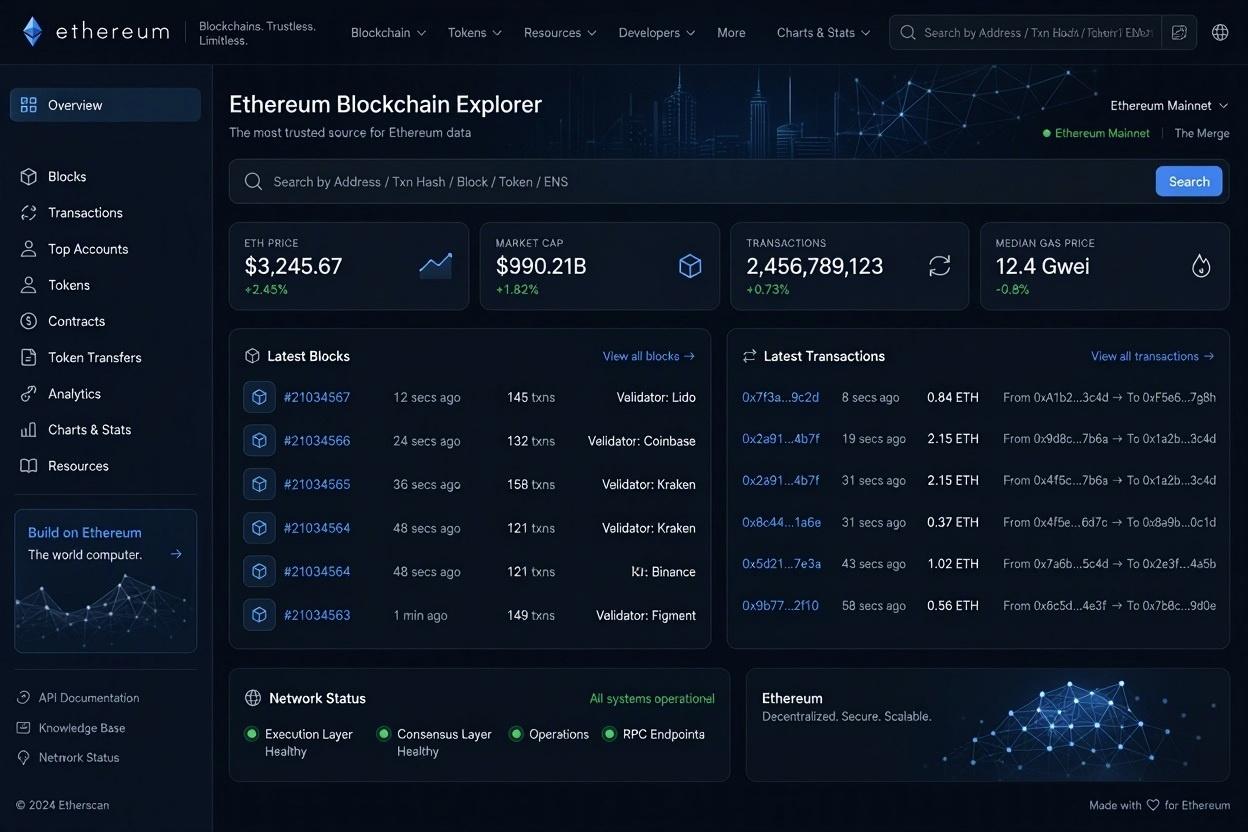
A blockchain explorer ethereum is a search engine for the public ledger where every transfer and transaction sits permanently visible to anyone. Search by transaction hash, wallet address, or block number to verify transactions and read plain facts about Ethereum activity.
blockchain explorer ethereum
Your ETH sits pending, and a blockchain explorer (Ethereum) check takes ten seconds. Paste the transaction hash into the search bar. Read the status line. Trust the chain, not your wallet screen.
What a blockchain explorer Ethereum tool actually shows you
An explorer is a search engine for the public ledger. Every transfer, swap, and token mint sits there. Anyone can read it. No account is needed.
You search by hash. You search by address. You search by block number. Each search opens a page full of plain facts.
Ethereum hashes start with 0x. A transaction hash runs 66 characters. A wallet address runs 42. Check the length first. A short string means a typo.
Think of it as a bank statement everyone can read. Nobody can edit it. Worth knowing.
How to read an Ethereum transaction page
Every blockchain explorer Ethereum page follows the same basic layout. Start with the status line. Pending means the network hasn’t included your transfer yet. Success means it’s done. Failed means the code stopped.
Next, read the from and to fields. Match both against the addresses you expect. One wrong character sends money to a stranger.
Then check the fee. Ethereum charges gas. Gas has a price in gwei. You pay the gas used times the gas price.
A failed transaction still costs gas. This surprises new users. Validators did the work. They get paid.
The nonce deserves a look. It counts every transaction your address has sent. One stuck nonce blocks every later transfer. You fix it with a new transaction. Use the same nonce and a higher fee. Most wallets call this Speed Up.

Why a blockchain explorer Ethereum search protects your wallet
Scammers copy addresses. They send you a zero-value transfer. Their lookalike address now sits in your history. Copy from that list later, and you pay the scammer. People call this address poisoning.
The fix is simple. Compare the full address, not just the first and last few characters. Look up the address before you send anything.
Check its age. Check its balance. A brand new address with no history is a red flag. You expected an exchange deposit address. You got a ghost.
Contract pages add more detail. A verified contract shows readable source code. An unverified one shows raw bytecode. Skip the unverified ones unless you know the team.
Token approvals are the quiet danger. An old approval lets a contract spend your tokens. Review them often. Revoke the ones you don’t use.
Send a small test transfer first. Spend two minutes and a few dollars. Confirm it arrived. Then send the full amount.
Reading Ethereum block and network numbers
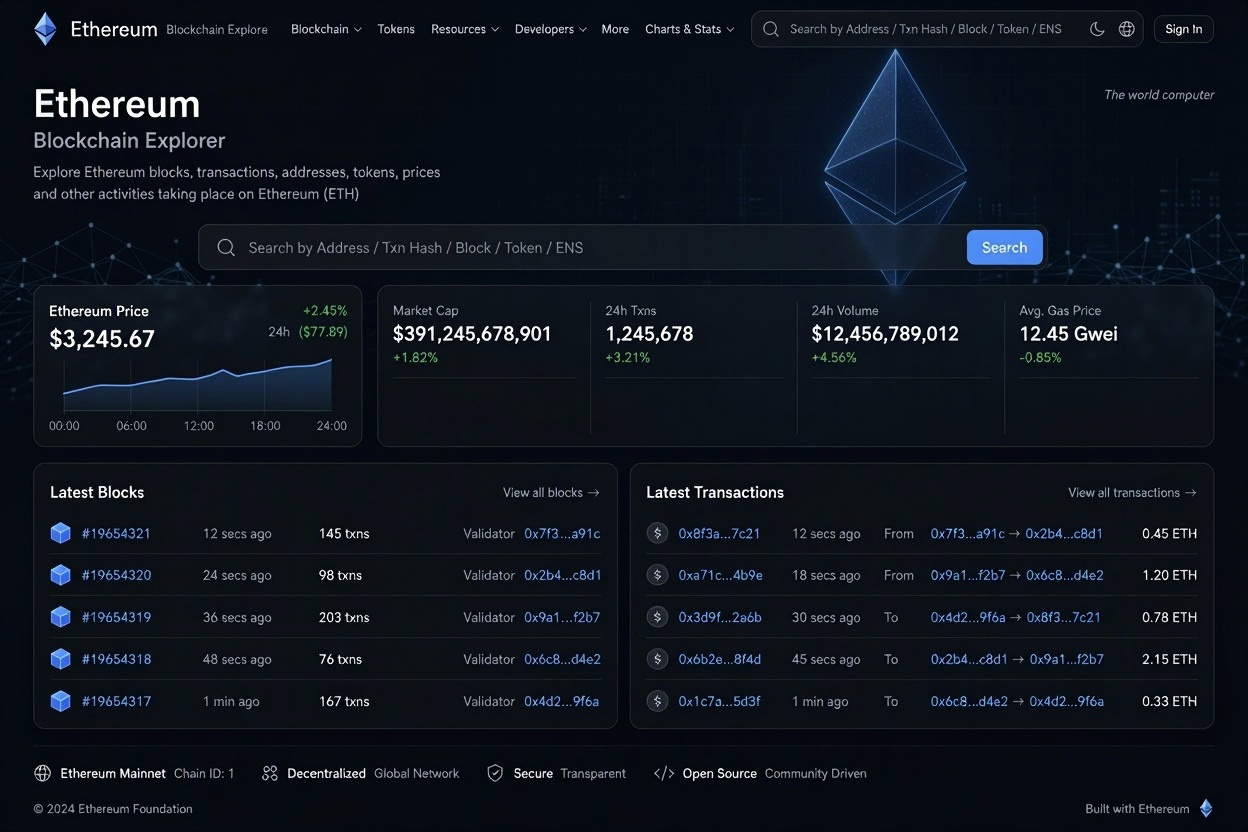
Open the latest blocks list. Ethereum adds a block every 12 seconds. Proof of stake sets that steady pace.
Block size varies. On Nov 22, 2026, six recent blocks held between 65 and 344 transactions. Quiet blocks mean low fees. Busy blocks push fees up.
Look at the unconfirmed count too. The live Ethereum network statistics showed 31,445 pending transactions on Nov 22. A big queue tells you to raise your fee.
The same panel listed 23.22 transactions per second. It counted 450,870,534 unique addresses. The chain held about 1,800 GB of data. Your single transfer is one grain in a very big pile.
Why Ethereum and Bitcoin feel so different
Bitcoin runs on a slower clock. On the same day, Bitcoin’s average confirmation time read 42.3 minutes. Ethereum’s read 12 seconds.
Bitcoin blocks are bigger. Recent ones held 5,714 to 7,146 transactions each. Another 40,397 transactions waited in the mempool.
Bitcoin uses mining. Its hashrate is 1,149.27 EH/s. Ethereum uses staking instead. It has no hashrate to report.
This changes how you wait. A large Bitcoin payment can take an hour to feel safe. An Ethereum payment often settles in about a minute.
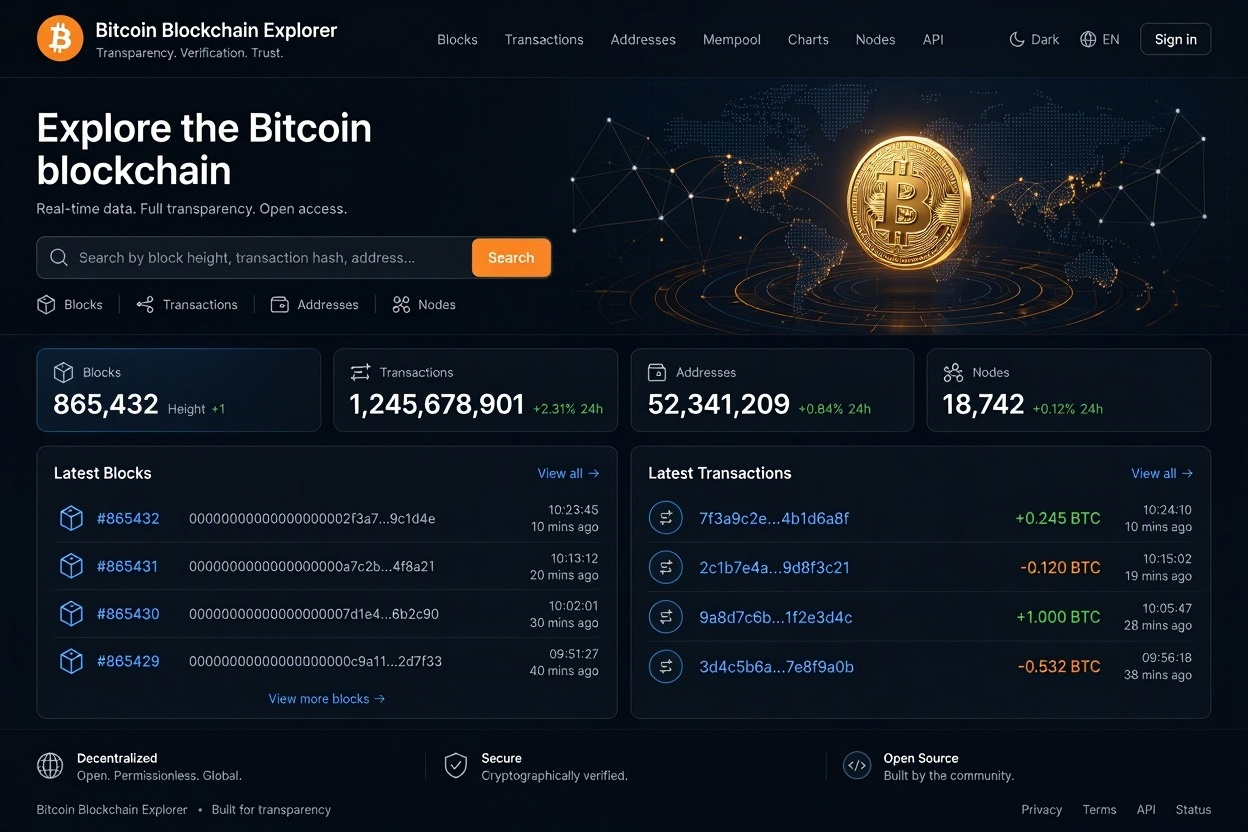
Many people hold both coins. A Bitcoin and Ethereum block explorer in one tab lets you compare both chains side by side. You stop guessing why one transfer is slow.
Using CryptoExplorerHub as your blockchain explorer: Ethereum starting point
CryptoExplorerHub tracks blocks, transactions, and addresses on Bitcoin and Ethereum. It updates in real time. The layout stays plain and loads fast. That suits a quick check.
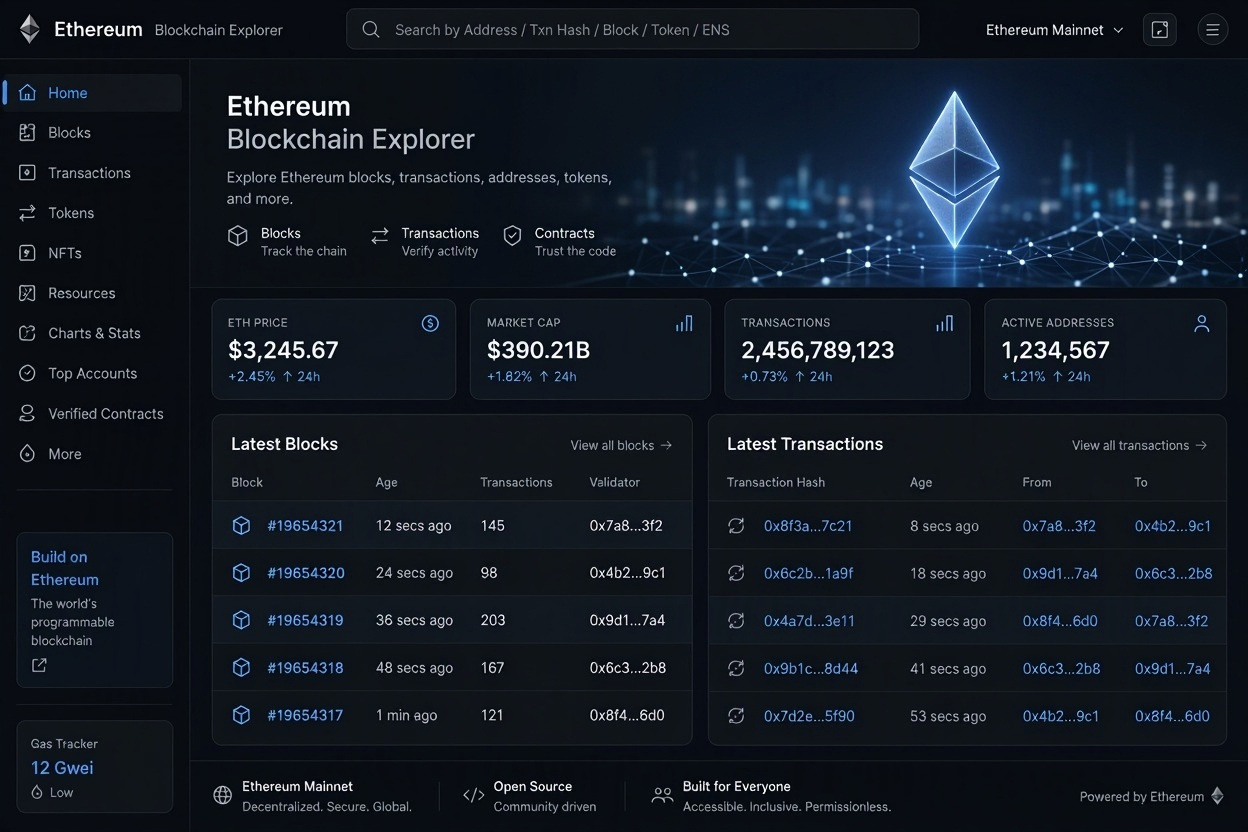
Start at the CryptoExplorerHub homepage. You get one search bar with example hashes beside it. Below it sit cards for BTC and ETH price, block height, and mempool size.
Each chain has its own panel. You see the latest blocks, the latest transactions, and network stats. The Bitcoin side also shows which mining pools found blocks over the last five days.
A built-in converter turns coin amounts into dollars. On Nov 22, 2026, 1 ETH converted to $1,708.58. The site marks these values as indicative only. It isn’t financial advice.
A top-ten price table sits at the bottom. It lists price, 24-hour change, volume, and market cap. Use it for a fast sanity check before you trade.
Mistakes to avoid with a blockchain explorer Ethereum lookup
Don’t trust a lookalike site. Phishing pages copy explorer layouts. Bookmark the real one. Type nothing into a page you reached from an ad.
Never connect your wallet just to read data. Reading needs no signature. A prompt to connect is a warning sign.
Don’t trust token names. Anyone can name a token USDC. Check the contract address against the project’s official site.
Don’t panic at a pending status. Low-fee transactions wait in line. Compare your fee to recent blocks. Then decide.
No explorer will ever ask for your seed phrase. Not once. Close the tab on the spot.
Open the explorer now and paste your latest transaction hash.
Frequently Asked Questions
What is a blockchain explorer for Ethereum?
It’s a website that lets you search the Ethereum ledger. You can view transactions, addresses, blocks, and gas fees. It reads public data. You don’t need an account.
Why is my Ethereum transaction still pending?
Your gas fee is probably too low. Validators pick higher-paying transactions first. Check the fee on the explorer. Then speed up the transaction in your wallet.
Can I see who owns an Ethereum address?
Usually not. Addresses are public, but they don’t carry names. You can see balances and history. Some well-known exchange and contract addresses carry labels.
How many confirmations does Ethereum need?
One confirmation arrives in about 12 seconds. Small payments are often fine after one. Exchanges may ask for more on large deposits. Check their rules first.
Does CryptoExplorerHub cover chains besides Ethereum?
Yes. It covers Bitcoin and Ethereum. Each network has its own blocks, transactions, and statistics. It also shows live prices and a spot-price converter.