Track Every Bitcoin Transaction in 30 Seconds
A blockchain explorer bitcoin tool transforms raw Bitcoin data into searchable pages showing blocks, transactions, and addresses. Paste any transaction ID to see its exact status and confirm payments on Bitcoin’s public ledger.
blockchain explorer bitcoin
Your friend swears she paid you, so open a blockchain explorer Bitcoin page. The chain doesn’t care about anyone’s memory. Paste the transaction ID, and you’ll see the exact status.
What a Blockchain Explorer Bitcoin Tool Actually Shows You
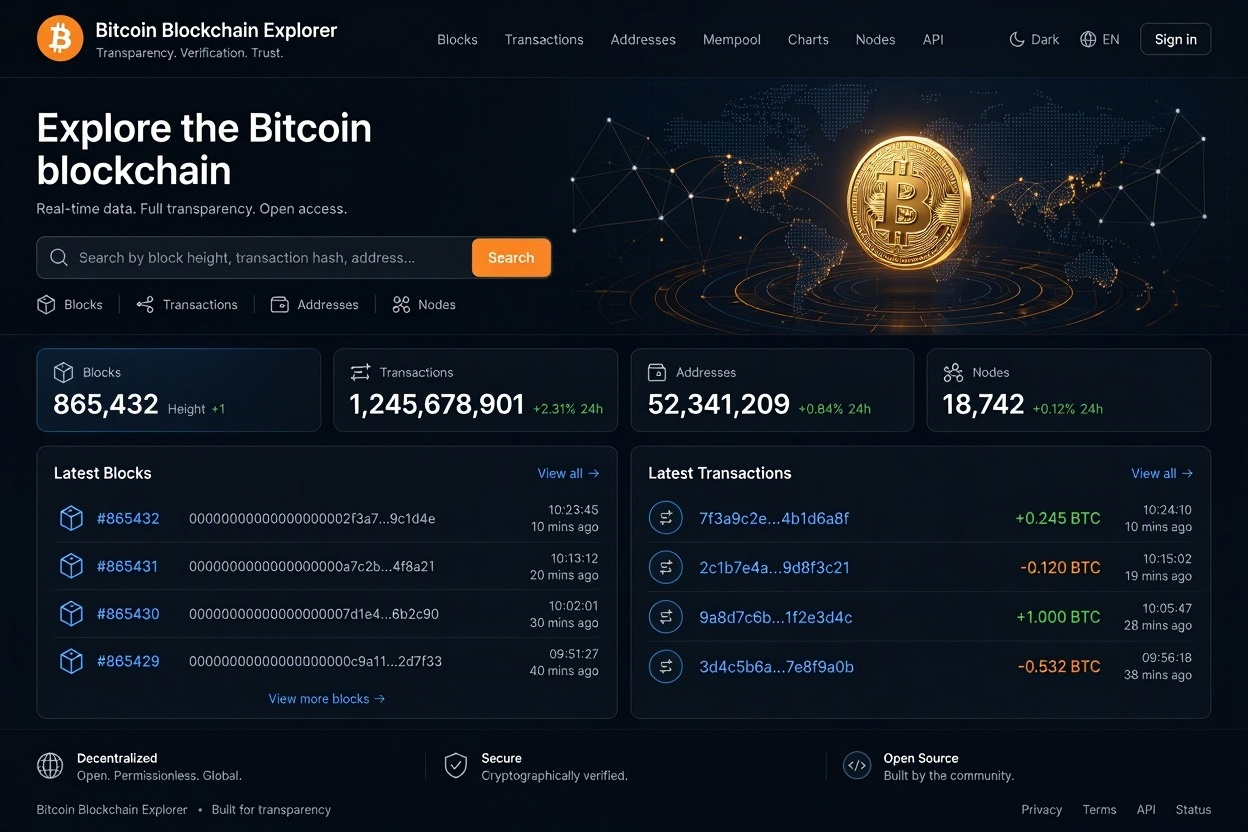
Bitcoin keeps one public ledger. Anyone can read it. An explorer turns the raw data into pages you can search.
A good blockchain explorer Bitcoin tool shows three things. Blocks. Transactions. Addresses.
A block is a batch of confirmed payments. A transaction is one payment. An address is a public label for a wallet.
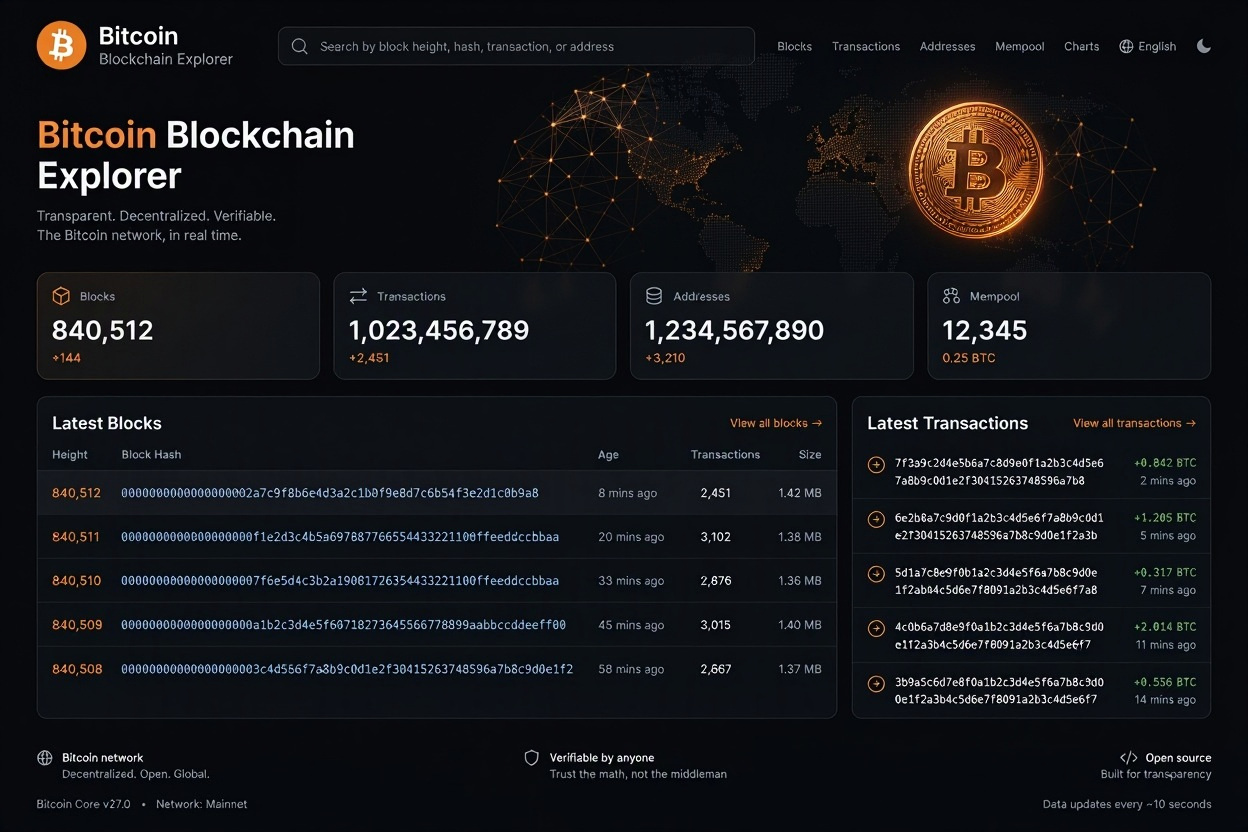
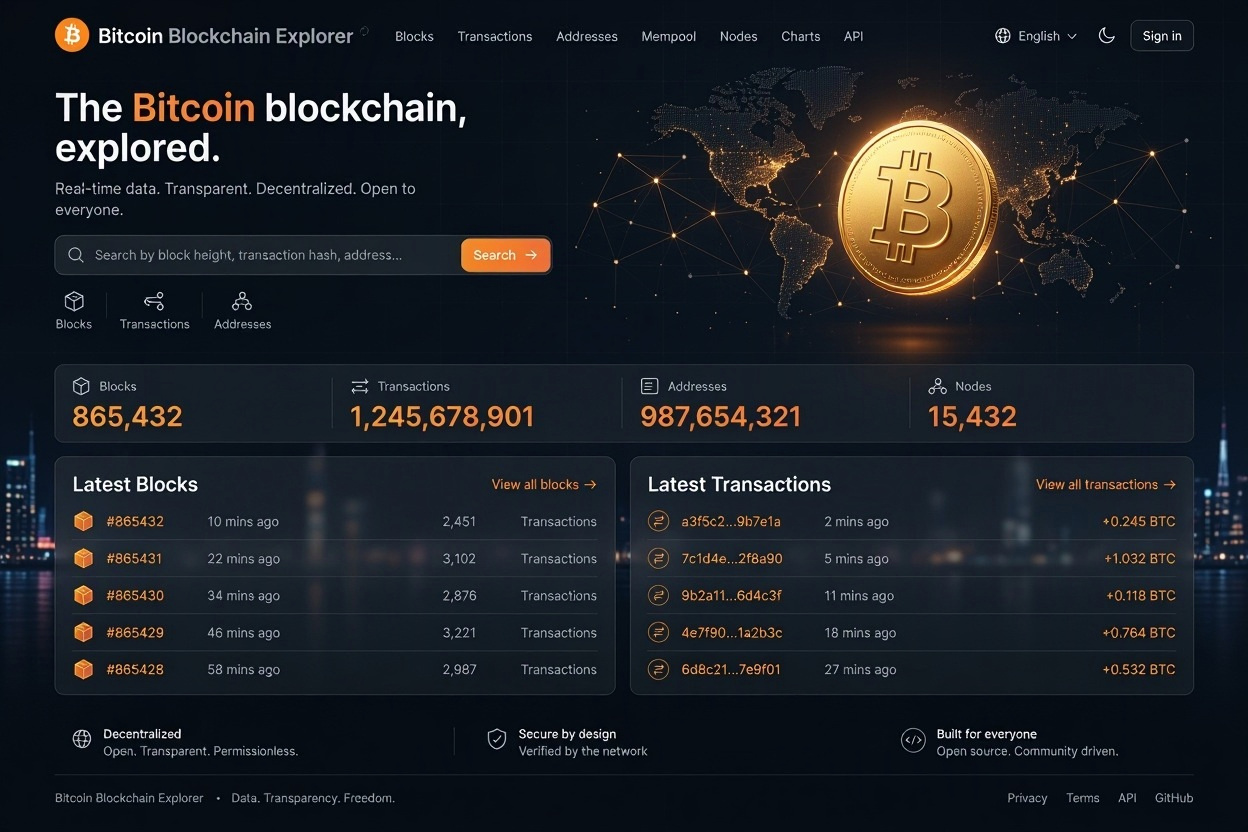
Look at CryptoExplorerHub as an example. Its home page lists the latest Bitcoin blocks. Each row shows height, transaction count, and time. Block 977,045 held 6,814 transactions on November 22, 2026.
Click any row. You’ll see inputs, outputs, and the fee paid. That’s the whole payment, laid bare.
How to Trace a Stuck Payment With a Blockchain Explorer: Bitcoin Search
Start with the transaction ID. Your wallet shows it in the payment details. Copy it and paste it into the search box.
Now read the status. Unconfirmed means no miner has included the payment yet. Confirmed means a block holds it.
Waiting is common. The mempool is the waiting room for unconfirmed payments. It held 33,149 of them on November 22, 2026.
Fees decide the order. A low fee sends you to the back of the line. The average confirmation time on the page read 42.3 minutes.
Don’t send the payment twice. Double sending is the costliest mistake here. Check your blockchain explorer Bitcoin results first.
Many wallets offer a speed-up button. Use it to raise the fee.
Reading Blocks and Mining Pools
Height is a simple count from the first block. Blocks don’t arrive on a clock. Block 977,043 and block 977,044 landed eleven minutes apart. Block 977,045 followed 94 seconds later.
Miners build these blocks. Pools group many miners together. They share the reward.
The first transaction in each block pays the miner. People call it the coinbase transaction. Explorers read it to name the pool.
CryptoExplorerHub matches these against the mempool.Space pool list. Its chart shows each pool’s share of blocks over the last five days.
Watch this chart. One pool with a huge share should worry you. Spread-out mining is healthier.
Network Statistics Worth Checking on a Blockchain Explorer Bitcoin Dashboard
The dashboard also shows network health. Hashrate stood at 1,157 EH/s. That’s the combined guessing power of every miner.
Higher hashrate makes attacks costlier. Falling hashrate deserves a second look.
Chain size read: 894.74 GB. That’s the disk space a full node needs today. Buy a 2 TB drive if you plan to run one.
Throughput showed 10.53 transactions per second. Unique addresses numbered 495,637.
Use a blockchain explorer or Bitcoin dashboard to spot trends. Compare the numbers week to week. One day’s snapshot says little.
A Blockchain Explorer Bitcoin Page Can Also Convert Prices
Price sits right beside the chain data. Bitcoin traded at $60,841.00 on the page. That’s up 5.10% in 24 hours. Market cap stood at $1.22T.
The converter is handy. Pick 0.1 BTC, and it shows $6,084.10. Pick 0.01, and you get $608.41. Both use the latest market price.
Check the dollar value before you send. A small slip in decimals costs real money.
The live crypto price tracker also ranks the top ten coins. You see market cap, volume, and daily change in one table.
The page calls its numbers indicative only. Believe it. Exchanges quote slightly different rates.
Ethereum Runs on a Different Clock
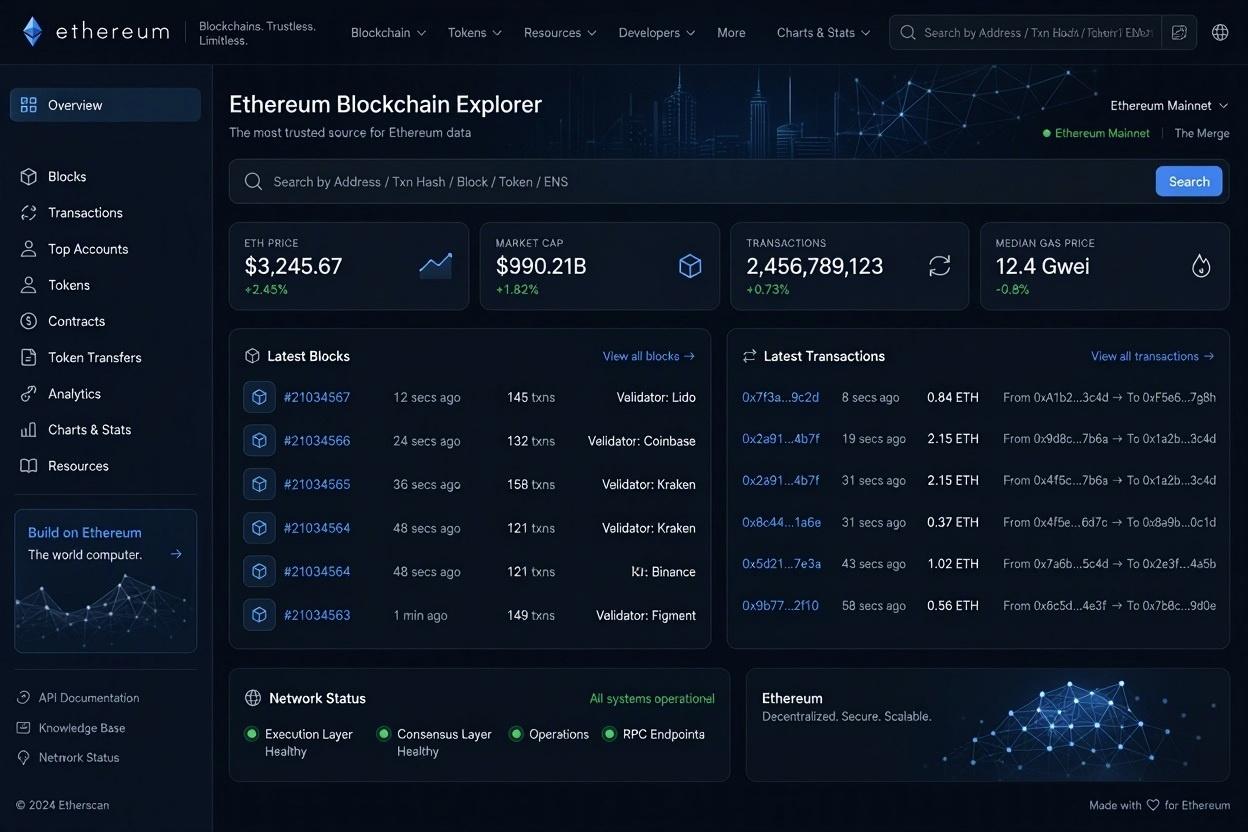
Switch to Ethereum and the pace changes. Blocks arrive every 12 seconds. Bitcoin blocks take minutes.
Ethereum uses proof of stake. Validators replace miners. Nobody burns electricity on guesses.
The latest block was 26,470,214. It held 307 transactions. Unique addresses reached 450,870,534. Chain size was 1,799.97 GB.
Throughput showed 18.49 transactions per second. That’s higher than Bitcoin’s number.
A Bitcoin and Ethereum block explorer saves you a second bookmark. You check both chains in one tab.
Safe Habits for Any Blockchain Explorer: Bitcoin Lookup
Explorers only read data. They never need your seed phrase. Any site asking for it is a scam.
Fake explorer sites copy real designs. Bookmark the real one. Run every blockchain explorer Bitcoin check from that bookmark.
Check the first and last six characters of an address before sending. Clipboard malware swaps addresses silently. Most people skip this.
Send a small test payment first. Confirm it on the explorer. Then send the rest.
Open the explorer, paste your latest transaction ID, and read its status today.
Frequently Asked Questions
What is a Bitcoin blockchain explorer?
It’s a search tool for the Bitcoin ledger. You can look up transaction IDs, addresses, and blocks. It only reads data.
How many confirmations are enough?
Six is the old standard for large payments. One confirmation works for small amounts. Bigger sums deserve more patience.
Does an explorer cost money?
Browsing public blockchain data costs nothing on most explorers. You pay only the network fee when you send coins.
Can anyone see my balance?
Yes. Anyone who knows your address can see its balance and history. Use a fresh address for each payment.
What is a transaction ID?
It’s a long string of letters and numbers. It identifies one payment. Your wallet shows it right after you send.