Convert BIP39 Mnemonics in Seconds Without Losing Access
A BIP39 mnemonic code converter translates each word in your seed phrase into numerical indices using a standardized word list. Never paste your real seed phrase into online tools, as this exposes your wallet to theft and compromise.
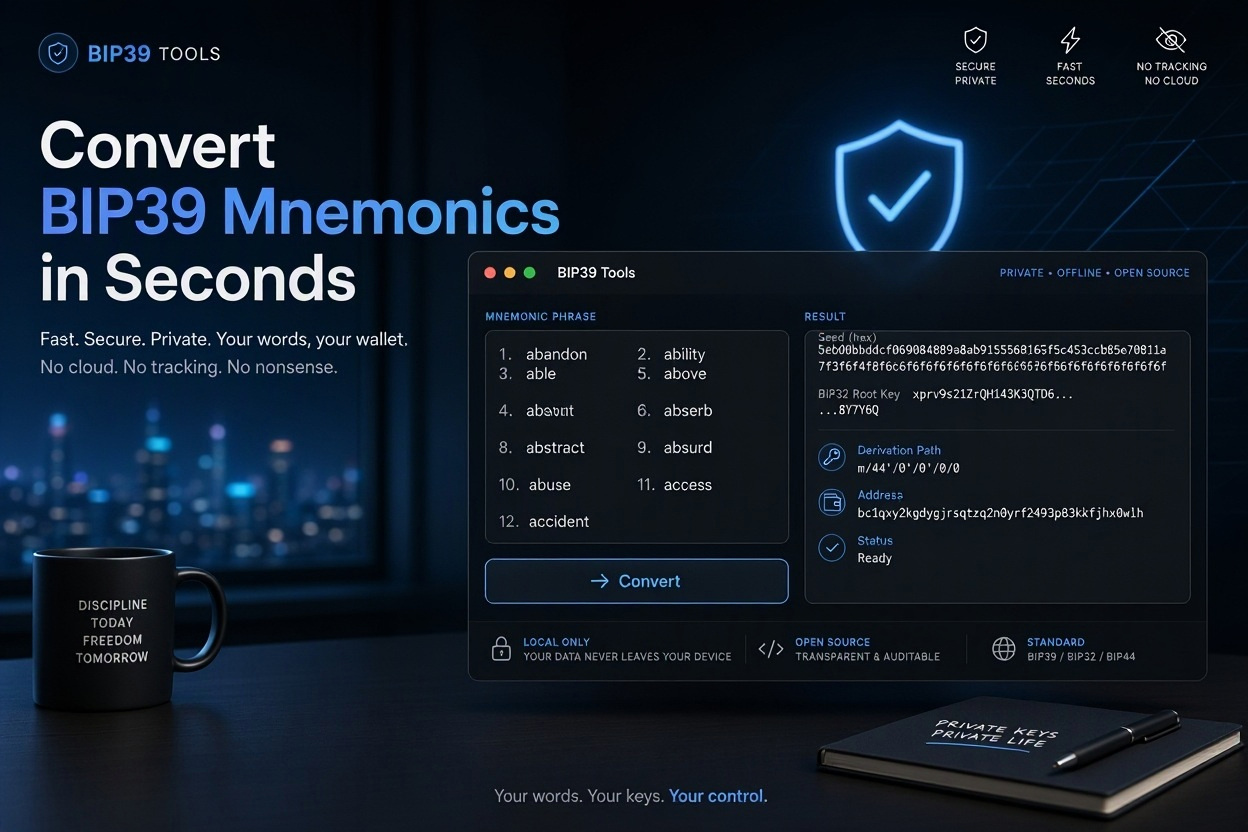
Last week, a friend pasted his seed into a BIP39 mnemonic code converter. The site looked fine. His wallet was empty by lunch. Never paste a real phrase into any online tool.
How a bip39 mnemonic code converter reads your words
Every word holds a fixed spot in the list. Abandon sits at index 0. Zoo sits at index 2047. A converter looks up each word and hands back its number.
Take the first word, abandon. Its index is 0. Its binary value is 00000000000. Its hex value is 000. Now take zoo. Its index is 2047. Its binary value is 11111111111. Its hex value is 7FF.
Each index fits inside 11 binary digits. Every other word lands between those two extremes.
Count the total. Twelve words give you 132 bits. Of those, 128 bits are random entropy. The last 4 bits are a checksum. A 24-word phrase carries 256 entropy bits plus 8 checksum bits.
Wallets count from zero. Many lists count from one. Mix them up and every word shifts by one. Check any index against a numbered BIP39 reference before you trust a result.
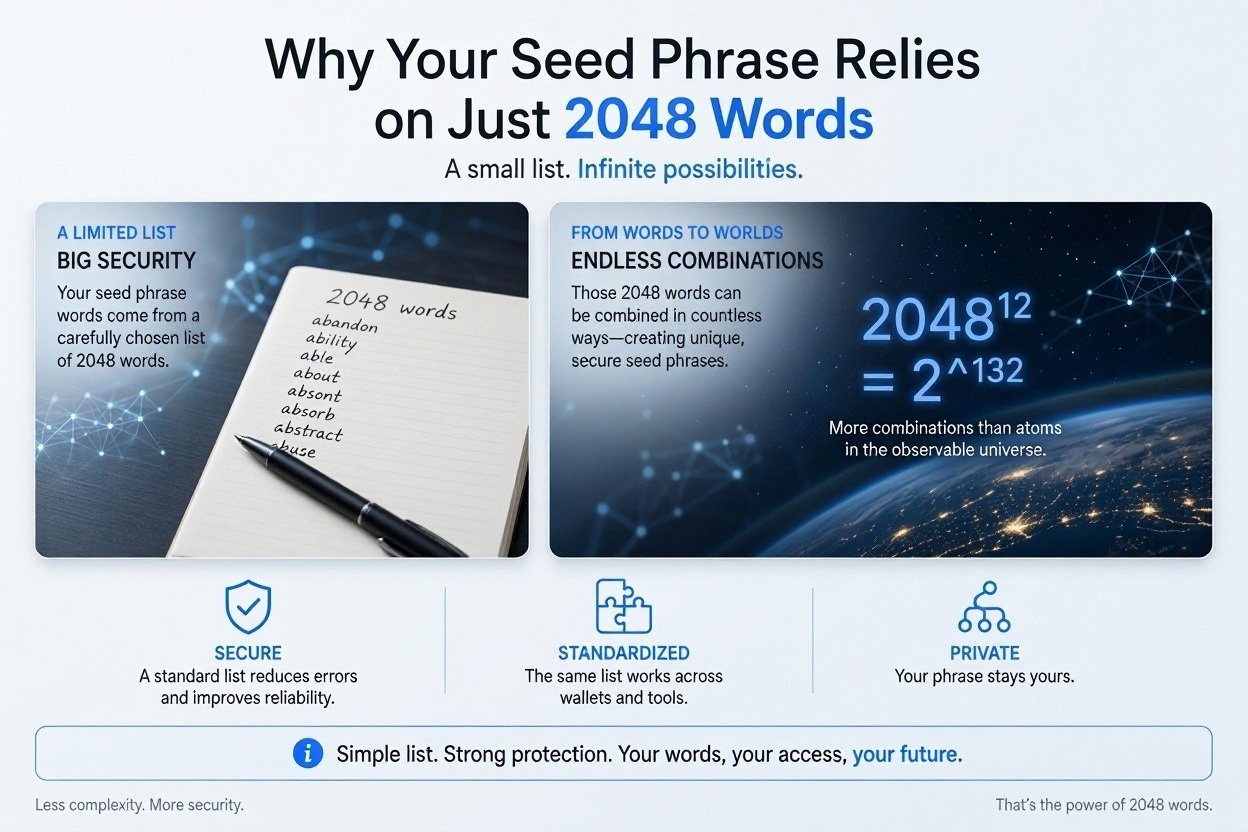
Why the 2048-word list never changes
The list entered the bitcoin/bips repository on February 7, 2014. It hasn’t changed since. Change one word and old backups stop working. Nobody wants that risk.
Two to the power of eleven is 2048. That’s why the list has this exact size. Each word carries a clean 11-bit value.
The design is smart. The first four letters pick out each word. Skill and skin split on the fourth letter. You can engrave short versions on a metal plate.
The standard also covers ten languages. Each language has its own 2048-word list. Pick one and stay with it.
Want to see the English words? Browse the official English BIP39 wordlist online. You can search by word and by number. Downloads come as PDF, CSV, TXT, and JSON.
From phrase to seed: what a BIP39 mnemonic code converter calculates
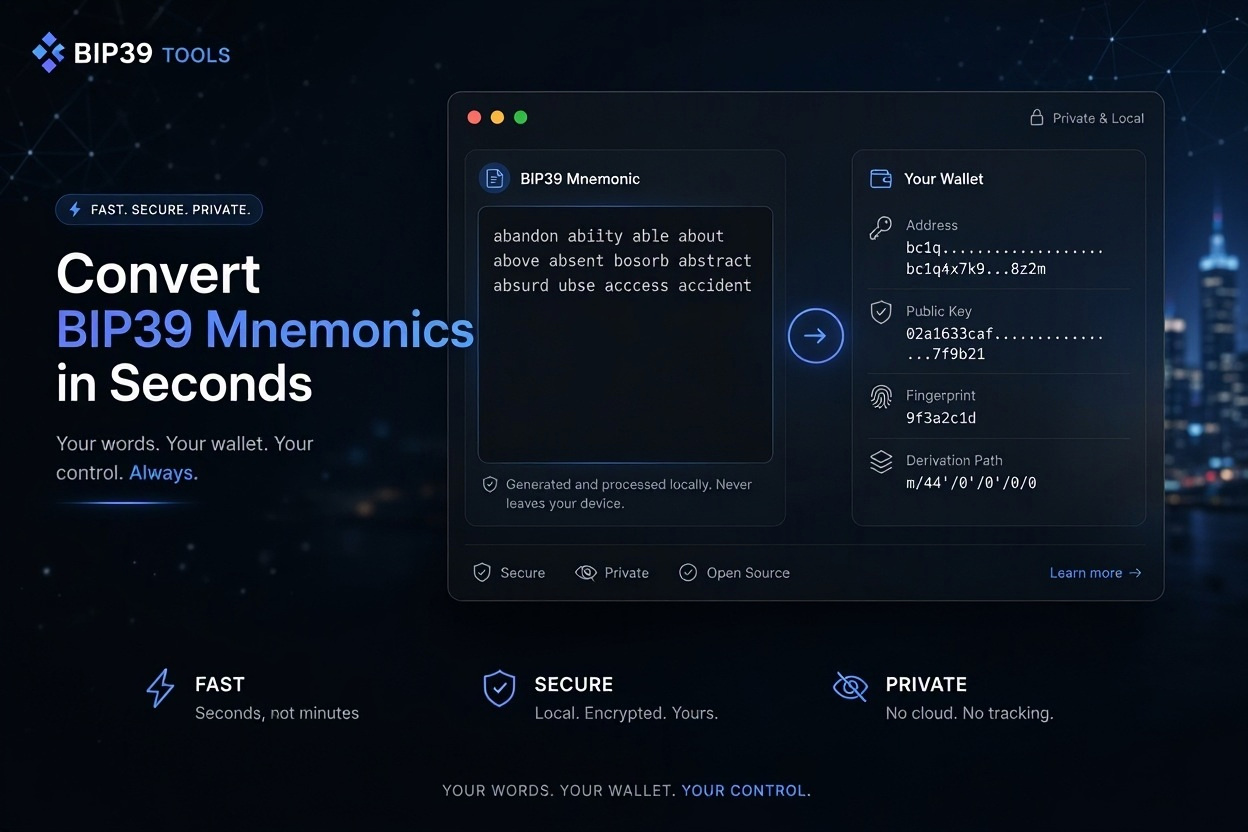
Here’s the part people miss. Your wallet doesn’t build keys from index numbers. It uses the words as plain text.
That text goes through PBKDF2 with HMAC-SHA512. The function runs 2048 rounds. The salt is the word mnemonic plus your optional passphrase. The output is a 512-bit seed.
A good tool shows that seed as 128 hex characters. Compare the first and last few characters across two tools. Matching ends tell you both tools agree.
The seed becomes your master key. Every address grows from that key. Same words, same seed, same wallet on any device. That’s the whole promise of the standard.
A passphrase changes everything. Add one letter, and you get a different wallet. The old wallet stays untouched. Lose the passphrase, and those coins stay locked.
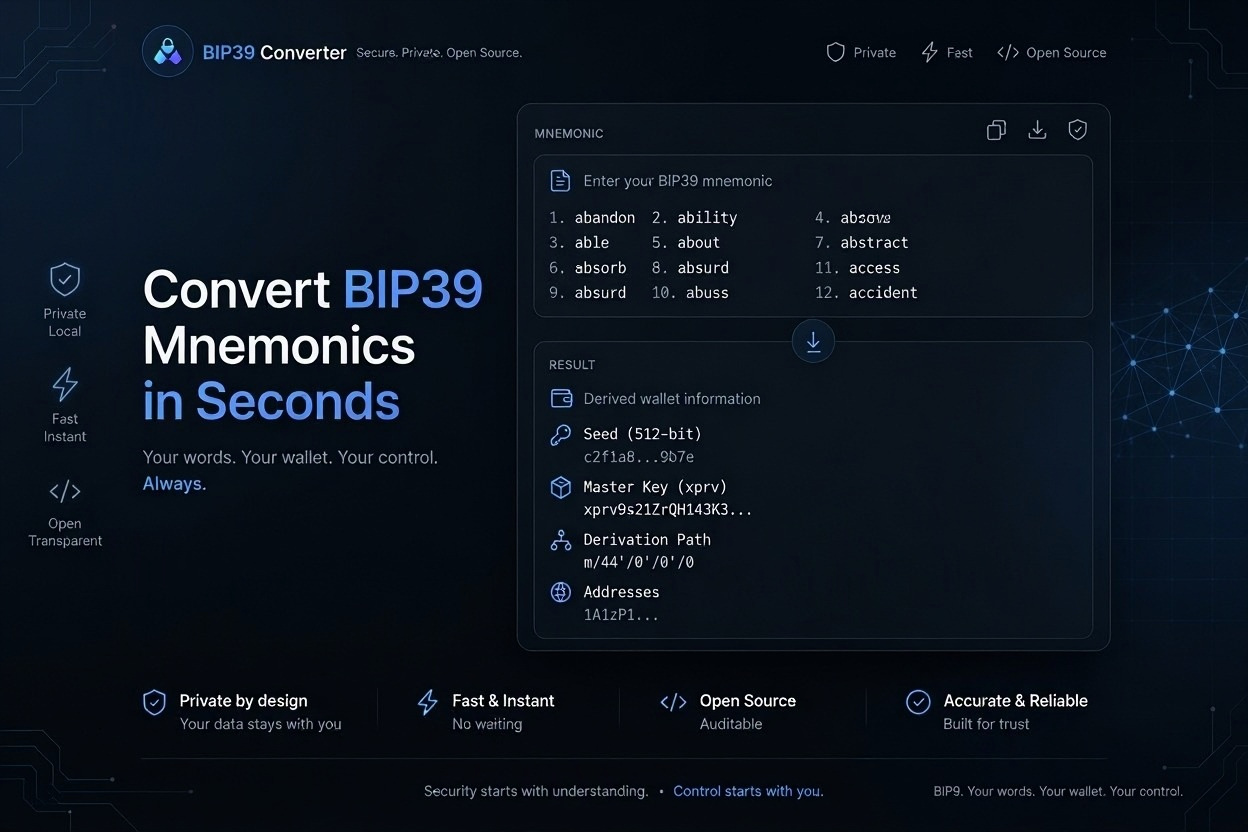
Using a bip39 mnemonic code converter safely
Treat every online tool as hostile. Save the page to your computer. Turn off Wi-Fi and unplug the cable. Then run it. Better still, boot a clean machine with no network at all.
Prefer tools with public source code. You can read what the page does. Skip any tool with hidden scripts.
Test first with a throwaway phrase. Use a BIP39 phrase generator to make one. Convert it. Compare the result with a second tool. Fund a test wallet with a few dollars. Restore it on another device. Only then trust your process.
Never screenshot a real phrase. Never save it in notes, email, and cloud drives. Paper and steel don’t get hacked.
Worth repeating: a real phrase never touches the internet.
Running a BIP39 mnemonic code converter in reverse
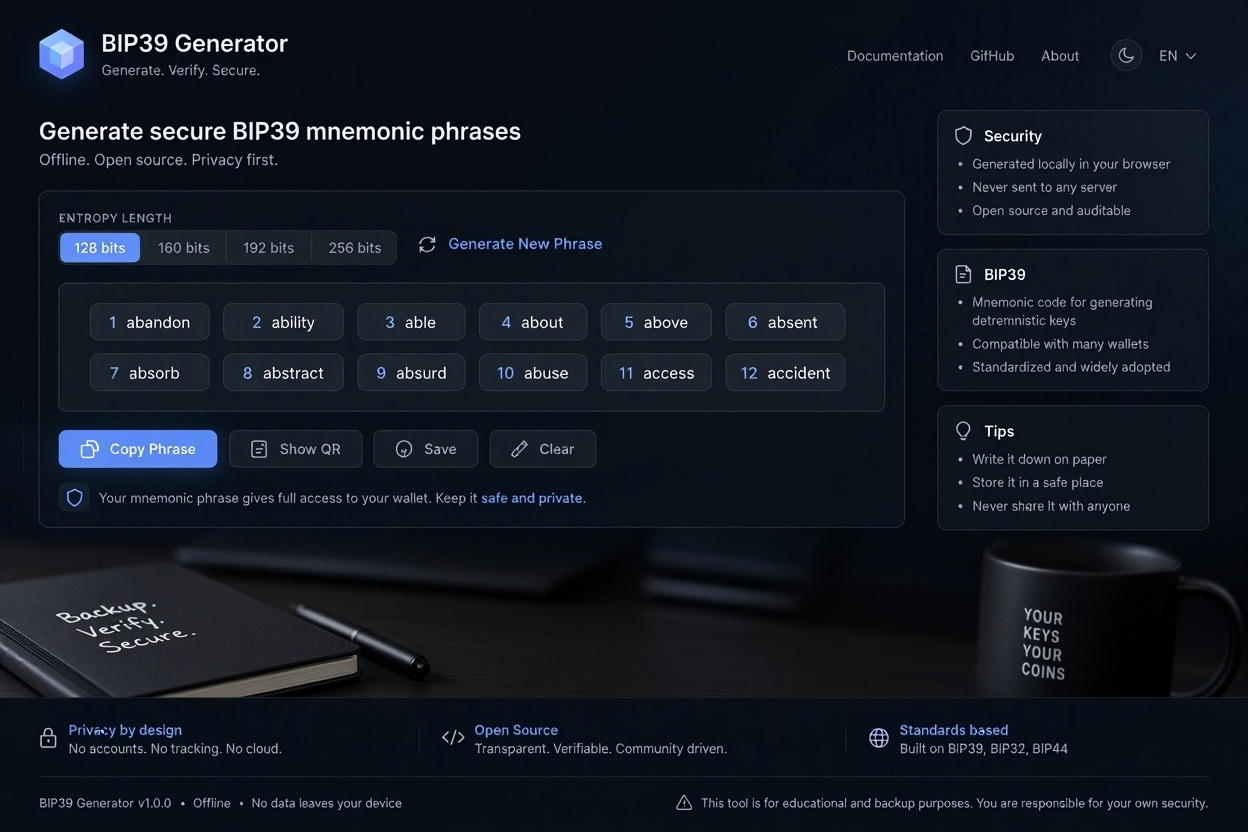
Converters work both ways. Start with 128 random bits. Hash them with SHA-256. Take the first 4 bits of the hash. Add them to the end.
Now split the 132 bits into twelve groups of 11. Each group becomes one index. Each index becomes one word. That’s your phrase.
Some people flip coins by hand. You’d need 128 flips and perfect notes. One slip ruins the phrase. Dice are faster but still tedious.
Don’t trust a website’s random numbers with real funds. Use a hardware wallet for that job.
Phrases come in 12, 15, 18, 21, and 24 words. More words mean more entropy. Twelve words are already strong enough for most people.
Typos, missing words, and what a BIP39 mnemonic code converter can check
Say you lost word seven of twelve. Only 128 of the 2048 candidates pass the checksum. A converter tests each one in seconds. Then you check those 128 for a balance. That’s a far smaller search than you’d fear.
Typos are easier. Angle and angry sit two spots apart in the list. Swap them, and the checksum usually fails. The converter flags the phrase as invalid.
Here’s the catch. A wrong word still passes about one time in sixteen. A valid checksum doesn’t prove the phrase is yours. It only proves the phrase is well formed.
Language needs care too. Translate a phrase word by word, and you get a different wallet. The seed comes from the exact text. Keep your backup in its original language.
Frequently Asked Questions
What is a BIP39 mnemonic code converter?
It’s a tool that turns seed words into numbers, bits, and seeds. It also turns random entropy back into words.
How many words does the BIP39 list hold?
The list holds 2048 words. Each word encodes 11 bits. Phrases use 12 to 24 words from this list.
Is an online converter safe to use?
Not with a real phrase. Use it offline with a throwaway phrase for learning. Real phrases belong on paper and steel.
Can a converter recover a wallet with one lost word?
Often, yes. The checksum cuts 2048 options down to 128. You still check each match for a balance. A passphrase makes recovery much harder.
Does the BIP39 word list ever change?
No. It has stayed fixed since February 7, 2014. Any change would break existing backups.
Download the wordlist today and test a throwaway phrase offline.